A Brief Overview
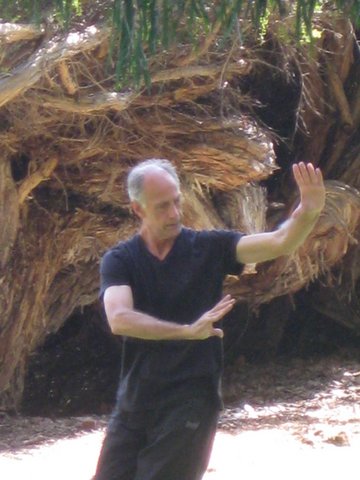
Xingyi chuaN
Xingyi is an ‘internal’ martial style (or more correctly and originally a system in itself) that has its roots firmly in the original Daoist concepts and practices and may well be the oldest of the internal martial methods.
It is thought that Xingyi was developed more for combat skill on the battlefield rather than as an art of self defence, and the inherent direct and assertive nature of its practice supports this view. Some sources say that its basis was originally just three fundamental techniques, although most schools today have embraced the ‘5 fists’ method of its practice, which has its roots in Daoist world view concepts and, later, Chinese medical thought and practice.
Later in its development the skills basis of Xingyi and its combat versatility was enhanced by the integration of animal styles (classically 12) into the system, although these too had deeper Daoist methodology behind their introduction.
One of the great strengths of Xingyi is its system of ‘nei gong’ methods which access and integrate internal structural, functional and energetic connections to produce the dynamic ‘whole body power’ that the internal arts – and Xingyi in particular – are renowned for.
Without the essential nei gong skill Xingyi becomes just a form; a “tiger without its bones” as the old ‘master hands’ say. One of the keys to the practice of Xingyi is to be found in its name: body (xing) mind (yi) as one; integration of form (xing) and intent (yi).
All for one and one for all.
Bagua Zhang
In some respects Xingyi chuan practice forms the hub or the core of our methods in the school.
However, gaining a firm understanding and deep appreciation of its sister art, Bagua zhang, is essential for the higher skills necessary to become a dynamic and informed internal martial arts practitioner.
Like Xingyi, Bagua has its roots deep into ancient Daoist concepts, and indeed the martial art evolved from early Daoist ‘circle walking’ practices, a method used by the Daoists (and probably shamanic in origin) to “communicate with heaven and earth”, and integrate celestial and earthly energies with that of the practitioner.
Ba Gua places a (natural) emphasis on circular movement and on constant motion, and has neigong practices that are similar to those of Xingyi, although they may be more static in their development and horizontal in their application.
It too aligns with the ancient Daoist concepts, having been developed to conform with the Ba Gua (eight directions of energetic movement and influence) theory of constant change.
The only constant is change.
Daoist Neigong
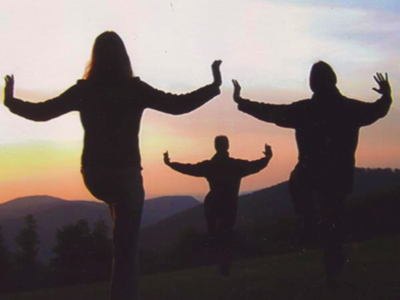
Woven into our practice with inseparable intimacy is neigong work, which we consider fundamental to, and a hallmark of, true internal martial arts training. These deceptively simple exercises build inner structural and functional connections and integrity, and are the source of the secret or mysterious skills of the masterhands of old.
Neigong work is combined with ‘qigong’ (energy work which promotes the flow of ‘qi’ and blood) in a natural and interdependent way. Although to some extent it is possible to practice qigong without an understanding on neigong work, a natural outcome of correct neigong work is that qigong skill is developed and acquired at the same time.
So, in practice, the two terms (qigong and neigong) are in fact functionally inseparable, and this is how it is taught and practiced in our school.
This is applied to our approach to the practice of the classical qigong methods as well, such as the “Ba Duan Jin” ( eight pieces of silk) and the (earlier) “Five Primal Animals” sets, so that they are brought more to life and the benefits intrinsic in their spirited practice become more discernible.